Meet the Curator
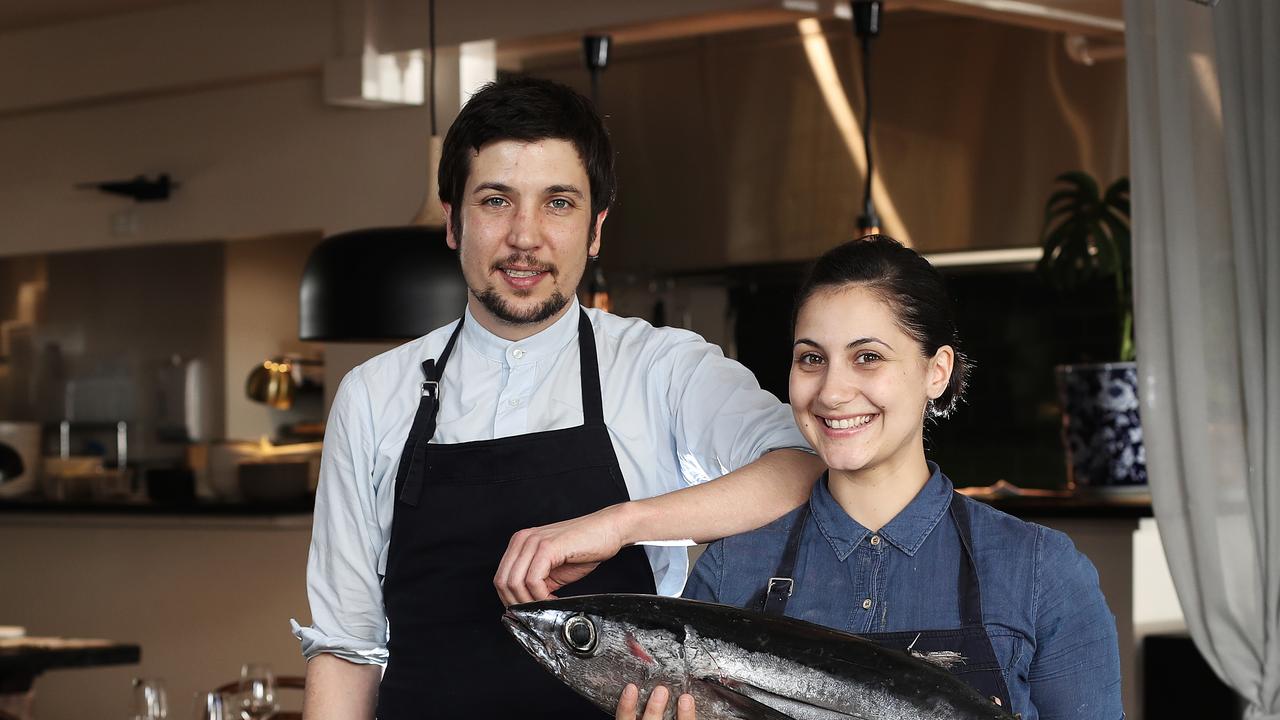
Federica Andrisani and Oskar Rossi
Chef Federica Andrisani
For Naples-born Federica (Freddy) Andrisani, the power of food to connect people to place, produce and one another has been one of life’s constant threads. Although she began her studies in anthropology, Freddy was ultimately drawn to the creative freedom and cultural depth of the culinary world, with her passion leading her to hone her craft in some of Italy’s most renowned and respected Michelin-starred kitchens, including Uliassi, Reale, and Trussardi alla Scala.
After meeting her partner and fellow chef Oskar Rossi in Veneto, Freddy relocated with him to his hometown of Hobart, Tasmania, in 2015. The pair’s creative synergy quickly gained attention through a series of highly successful pop-up dining experiences, culminating in the opening of their now celebrated restaurant Fico in 2016. Building on that momentum, the duo launched their second venture, Pitzi, in 2023.
At both restaurants, Freddy’s commitment to quality produce, thoughtful execution, and extraordinary but unpretentious dining experiences is evident through her co-design of the menus and wine lists, and team leadership both back- and front-of-house.
Chef Oskar Rossi
Tasmania-born Oskar Rossi’s earliest influences continue to underpin his food and wine philosophy today. His father – a successful Tasmanian artist and restaurateur – taught him to hunt for and prepare game meats and other produce from an early age, and instilled a deep respect for simplicity, fine wine, and the ritual of celebrating and sharing in the beauty of life through food.
Oskar’s culinary career has taken him from
completing his apprenticeship in the kitchens of Melbourne’s acclaimed Vue de monde, to stages in the Middle East/Asia, and Michelin- starred restaurants across Europe. It was while working at El Coq restaurant in Italy that he met and fell in love with Federica Andrisani and, while cooking together there, they began dreaming about opening their own restaurant.
Returning to his hometown Hobart in 2015, Oskar and Federica brought together his knowledge of local produce with their combined technical expertise in European cuisine – opening Fico the following year.
With a thoughtful and understated approach,
Oskar now co-designs the menu and wine list at both Fico and sister venue Pitzi, creating dining experiences that feel relaxed and deeply personal
Meet the Curator
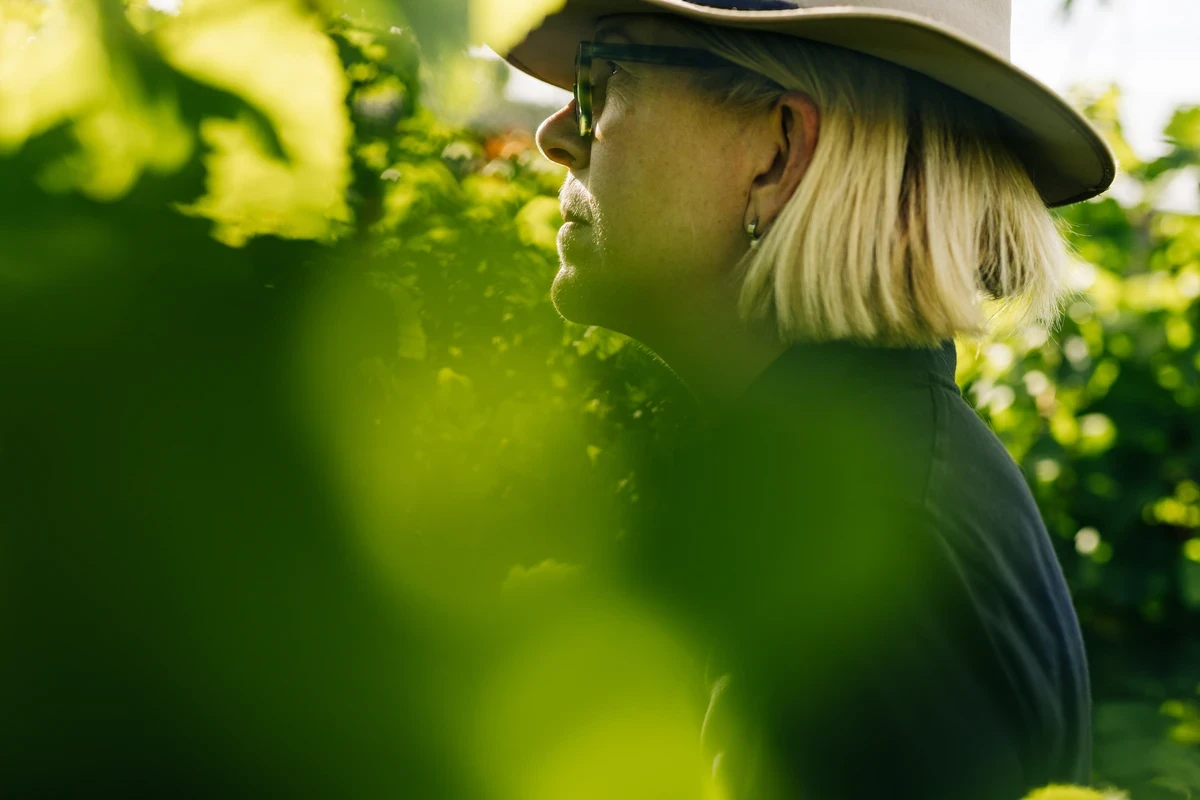
Samantha Connew
A highly experienced and respected winemaker, Samantha (Sam) Connew is the owner and winemaker, and self-described "somewhat unreliable vineyard hand" behind her Tasmanian solo project, Stargazer, launched in 2013. Her path to the Coal River Valley was unconventional; after completing a law and arts degree in Christchurch, New Zealand, her career trajectory shifted while working at a wine bar in the local Arts Centre. This early exposure to fine wine and food, followed by overseas travel, led her to pursue further studies in winemaking and viticulture at Lincoln University.
Samantha’s professional journey is a combination of international experience and deep Australian roots. Her first vintage in Oregon sparked a lifelong obsession with Pinot Noir, while her first-ever case purchase, a dozen bottles of Tamar Ridge Riesling, foreshadowed her eventual move to Tasmania. In the intervening years, she completed vintages in Italy and Spain, spent ten years as the Senior Winemaker at McLaren Vale’s Wirra Wirra Vineyards, and managed the boutique Hunter Valley winery Tower Estate. Prior to entering self-employment, she worked in applied research and development for the Australian Wine Research Institute (AWRI) as the Manager of the Hunter Valley Node.
Today, Samantha is one of the most well-respected figures in the Australian industry. In 2025, she was named the ASVO Winemaker of the Year by the Australian Society of Viticulture and Oenology, an honour that followed her 2023 nomination and Stargazer’s recognition as a finalist for the 2022 Halliday Wine Companion ‘Winery of the Year’. She has also been a two-time finalist for Gourmet Traveller Wine’s Winemaker of the Year award.
Beyond the cellar, Samantha is a leading voice in wine governance and education. A highly respected judge, she currently serves as the Chair of Judges at the Royal Adelaide Wine Show. In 2014, she made history at the Sydney Royal Wine Show as the first female and youngest judge to be appointed Chair of Judges. Sam remains deeply involved in industry education as an alumnus, board member, and tutor for the Len Evans Tutorial, and as an ongoing mentor in the Wine Industry Mentor Program.
The heart of her current work is the Palisander vineyard in the Coal River Valley. Since acquiring the site in 2016 and expanding it in 2017 and 2021, Samantha has transformed the property into an award-winning estate, earning the title of ‘Tasmanian Vineyard of the Year’ in 2019. In November 2025, she reached a significant new milestone with the opening of a dedicated tasting room at the Palisander vineyard, providing a welcoming setting for visitors to explore her celebrated wines while surrounded by the vines that produced them.

Meet the Curator
Sarah Clare
Sarah Clare grew up in the Huon Valley, in the small town of Cygnet on Tasmania's southern coast. One of nine children, she spent her early years fishing for mussels and oysters, picking wild mushrooms, and cooking alongside her father, a local potter whose crockery would later grace the tables of her own restaurant. That upbringing, steeped in the rhythms of a working landscape and the produce it yields, has shaped everything she has done since.
After years working in hospitality in Sydney and Melbourne, including time behind the bar at Melbourne's Murmur, Sarah appeared on MasterChef Australia in 2018 and returned for the Back to Win series in 2020. She was a compelling presence on both; her cooking grounded in place, her instincts deeply Tasmanian even when the format demanded otherwise.
Rather than parlay the exposure into a mainland career, she came home. Back in Cygnet, she spent time in the kitchen at Fat Pig Farm alongside Matthew Evans before launching Wild, a series of pop-up dinners built around beautifully sourced local ingredients. The pop-ups were a proving ground, and she went on to open ILHA, her own restaurant in Cygnet, where a menu of modern Australian cooking with South American inflections put Huon Valley produce at its centre.
Sarah now works at Harvest and Light in Geeveston, one of the Huon Valley's most distinctive addresses: a small-batch picklery, tasting house and gallery that sources and preserves the best of local seasonal fruit and vegetables, and showcases the full breadth of Tasmanian wine, cider, spirits and craft beer. It is exactly the kind of place Sarah was always heading toward; an operation built around provenance, craft and the quiet work of small producers. She continues to take on private events and pop-up dinners, where a five-course format with matched wines allows her to work with the ingredients and makers she knows best.
Sarah is also a trained sommelier, and the two disciplines inform each other. Her approach to wine is of a piece with her cooking: find the producer whose work you believe in, understand what they've made, and let that lead. She is a consistent and vocal advocate for the artisan growers, winemakers and makers who form the backbone of Tasmania's food culture, the people whose names rarely appear on menus but whose work makes the cooking possible.
That sense of place, and the people who tend it, is what drives her. Whether in a kitchen, at a long table for a private dinner, or pouring a Tasmanian pinot that most people haven't heard of, Sarah Clare is doing the same thing she was doing as a child on the southern coast: paying close attention to where food comes from, and making sure others do too.

Meet the Curator
Rodney Dunn
Rodney Dunn grew up on a farm in rural New South Wales, in the flat agricultural country of the Riverina. That early life set the course for a career that would eventually loop back to the land, though not before a long detour through some of Australia's most demanding kitchens and editorial rooms.
He trained as a chef under Tetsuya Wakuda at Sydney's celebrated Tetsuya's before moving into food media, joining Gourmet Traveller as Food Editor. It was a natural fit, but life behind a desk eventually pulled in the wrong direction. Inspired by the River Cottage approach to cooking and country living, and unable to find anything in Australia that connected that earth-and-kitchen relationship he was chasing, Rodney and his wife and co-founder Séverine Demanet made the move to Tasmania in 2007. The gap in the market was the idea.
That calculated leap of faith funded the first chapter of the Agrarian Kitchen: the Old Schoolhouse in Lachlan, in Tasmania's Derwent Valley, transformed into the state's first hands-on, farm-based cooking school. It opened in 2008 and in 2010 was voted Australia's Greatest Gourmet Food Experience by Australian Traveller Magazine.
The next chapter began in 2015 when Rodney and Séverine fell in love with the Bronte building in New Norfolk's Willow Court, the town's former mental asylum. With expansive spaces, sweeping windows and high ceilings lined with original pressed metal, the building begged to be filled with diners. The Agrarian Kitchen Eatery opened in June 2017 and just four months later was awarded two hats and named Best Regional Restaurant in Australia by the National Good Food Guide. A kiosk followed in 2020, offering a more casual entry point; house-made pastries, cakes, sandwiches and salads served among umbrellas, picnic tables and rugs. In 2022, the cooking school relocated from Lachlan to Willow Court, joining the restaurant and kiosk in a purpose-built wing of the building.
At the heart of it all is the kitchen garden, positioned just metres behind the Bronte building. Seasonal fruit and vegetables, a berry patch, greenhouse, shade house, nursery, orchards and citrus grove inform every aspect of the menu and drive creativity across the restaurant, kiosk and cooking school. It is at once a working resource and a space for learning.
What Rodney and Séverine have built over nearly two decades is something that didn't exist in Australia when they went looking for it: a place where the connection between grower, cook and diner is not a concept but a daily practice. Tasmania's exceptional produce; its cool-climate fruit and vegetables, its cheeses, its seafood and its small producers, has always been the foundation. The Agrarian Kitchen gave that produce a home worthy of it, and in doing so helped place Tasmanian food firmly on the national culinary map.
The Details
Duration
5 Nights
Group Size
Max 12
Accommodation
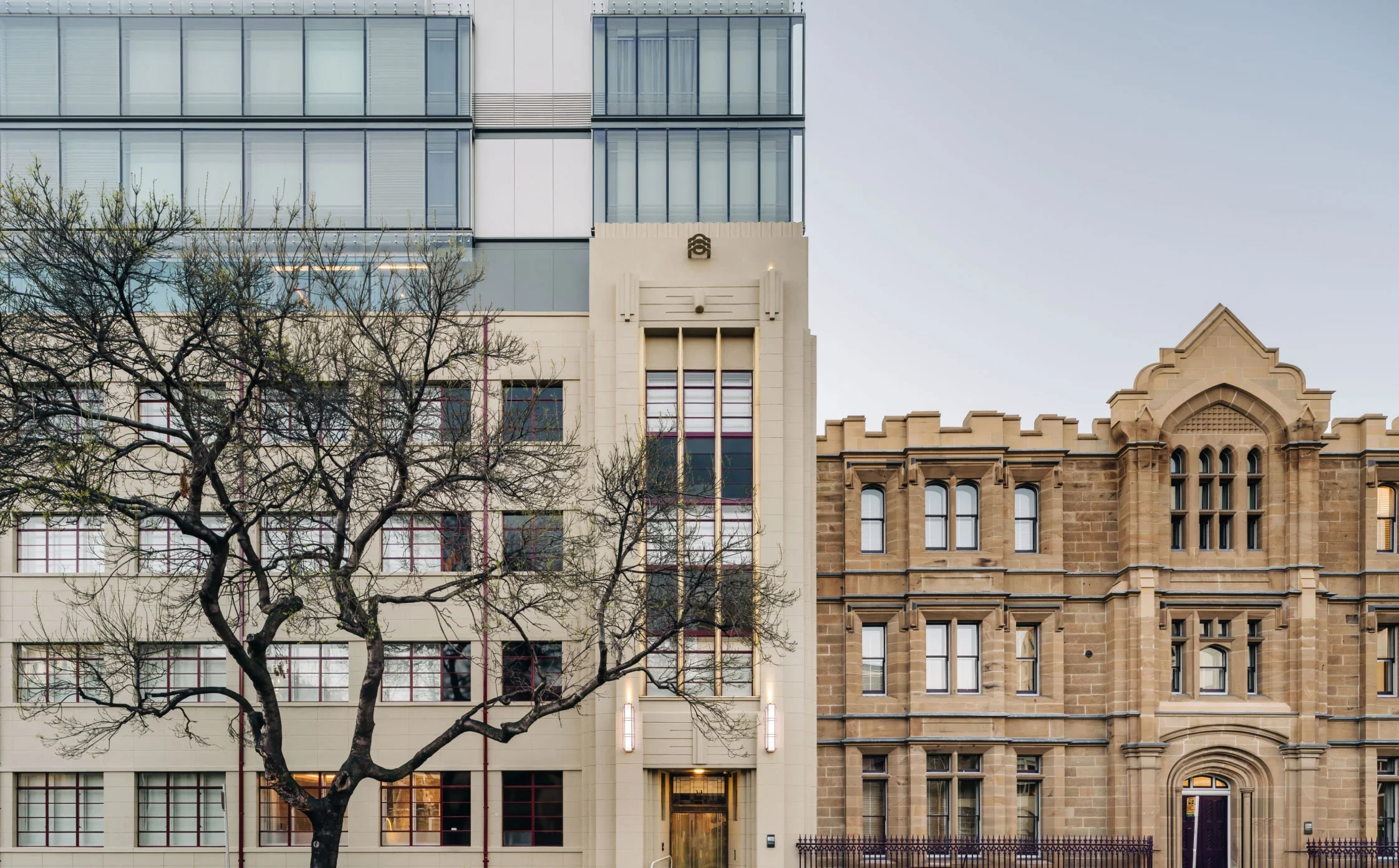
The Tasman
Inclusions
Dining, experiences, transfers
Exclusions
Flights

Tasmania doesn't shout. The food, the landscape and the people all move at the same unhurried frequency and the longer you stay, the more you feel yourself slow down to match it.
Sample Itinerary